
Alpha, beta, GA: a launch checklist for founders without a launch team
Your launch date is not your launch. How to stage an MVP through alpha, beta and GA, and the 7-item readiness checklist a three-person team can actually run.

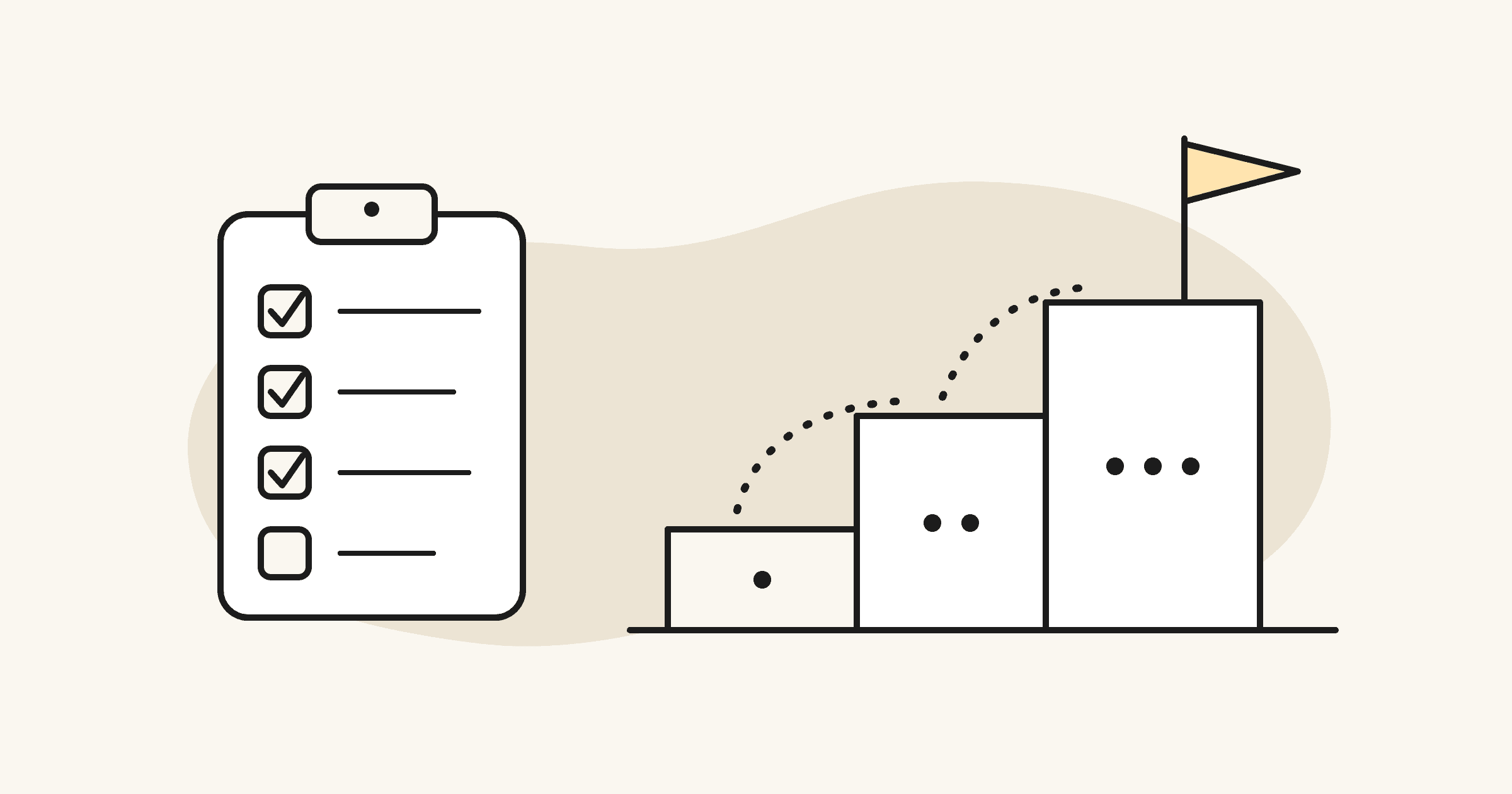
Your launch date is not your launch.
With Claude Code and Cursor, a small team can take an MVP from spec to production in weeks. What usually doesn't exist is an MVP launch checklist. Someone picks a date, the team deploys that morning, and the founder posts the announcement before lunch. By Friday, the support inbox nobody set up is full and the first real customers are finding bugs a friendly tester would have caught in an afternoon.
That's not a build problem. It's a launch problem. Shipping is a deploy. Launching is a series of decisions about who sees the product, when, and how much of it you can take back.
The framework I use comes from the product management course in my Stanford product management certification: stage the release, size the launch, and run a readiness check before each step. Here's the lean version, for a team of three with no launch team and no PR budget.
Short answer: An MVP launch checklist covers seven kinds of readiness: product, pricing and positioning, support, partners, operations, sales and marketing. Run a lean version before each release stage: alpha with friendly users, beta with people who opt in, then general availability. Start small and reversible, and set your success metric before you ship.
What's the difference between alpha, beta and GA?
Alpha, beta and general availability (GA) are release stages, and each one answers a different question.
- Alpha: does it work? Friendly people use it: teammates, advisors, a few design partners who'll forgive a broken flow. You learn whether anything breaks and whether the core flows do what you designed. You can't learn whether someone with no stake in you would bother.
- Beta: does it hold up with strangers? People opt in, knowing it's unfinished. You don't know them personally, so their behavior is closer to the real thing.
- GA: will the market pull it? Anyone can sign up. Now you're testing demand, pricing and distribution, not just the product.
The mistake I see most is jumping straight to GA because the product "works on staging." Each stage surfaces a different kind of problem while it's still cheap to fix.
How big should your launch be?
Size every launch on two axes: how reversible it is, and how big it is.
- Reversible vs. irreversible. What would it cost to take this back? A feature behind a flag is easy to pull. A public launch date, announced pricing, a press push or a partner commitment are much harder to walk back.
- Small vs. large. A small launch goes to internal users or a short invite list. A large one goes out with an announcement, outreach and paid campaigns.
For most early-stage software startups, the fastest path to a real GA is a string of small, reversible launches. Let the goal decide the size. If you're learning whether onboarding works, you don't need an announcement. If you need a wave of sign-ups to prove demand, you need some noise.
The MVP launch checklist: 7 readiness checks
Every launch has internal readiness (what has to be true inside the company) and external readiness (what the outside world sees). Here's the version a three-person team can run in an afternoon before each stage.
- Product. The core flows work end to end, known bugs are sorted into "blocks launch" and "fast-follow," and a new user can get started without you on the call.
- Pricing and positioning. One sentence on who it's for and what it replaces, and a price, even if it's "free during beta, and here's what it'll cost after."
- Support. An inbox someone checks every day, a way to report a bug from inside the product, and written answers to the questions you already know are coming.
- Partners. Everything you depend on is ready for real traffic: your model provider's rate limits, your payment processor's approval, the integration partner who needs to know you're coming.
- Operations. Someone is on call for launch week, you'll know something broke before a customer tells you, and you know how to roll back.
- Sales. A demo you can give in 15 minutes, and short answers to what every prospect asks: security, pricing, and "how is this different from what I use now?"
- Marketing. The launch story, told from the user's side: what changes for them, not what you built. If a user retold it to a colleague, what would they say?
Not every item applies at every stage. An alpha mostly needs product and support. GA needs all seven.
Set the success line before you ship
Before each stage goes out, write down the one metric that says it worked, the number you'll count as a miss, and what you'll do if you miss it.
Once something is built, everyone wants it to have worked, and almost any post-launch number can be told as good news. Without a line drawn in advance, you can't tell a win from a nice-sounding stat. Build the dashboard before launch day, not after.
When not to launch
Some releases shouldn't get a launch:
- Things you haven't built. "Coming soon" sets a public deadline you might miss.
- Small tweaks. Ship them quietly. Your audience's attention is a budget; don't spend it on a button.
- Changes you might take back. Don't draw attention to an experiment. Announce it once it's staying.
How I apply it with AI startups
Sabhi is a good example. It's a B2B messaging, payments and shipping platform for businesses that sell over text. I led product documentation and delivery for its closed launch, and three pieces of that work map straight onto the checklist:
- One launch journey. I documented the 13 steps from a buyer's first message to a review request. Every ticket points at one of those steps and says whether it's launch-critical or fast-follow.
- Scope you can defend. WhatsApp, automated A2P onboarding and full carrier automation moved to fast-follow so they couldn't block launch. A shared Definition of Ready and Done kept demo behavior out of production flows.
- Acceptance criteria you can test. I wrote eight feature PRDs with acceptance criteria, then a UI-only test suite anyone can run from staging: 13 suites and 300+ UAT scenarios. I ran it with Claude, read-only, so every failure came back with its root cause.
Staging works for features, not just products. When I designed the guided onboarding tour for Connecty AI, we shipped it in staging with the team first and refined it based on internal feedback and observed behavior. That's an alpha in practice: friendly users, a safe place to break things, and fixes made before a stranger ever saw it.
Where AI tools help, and where they don't
AI is most useful in the unglamorous middle of a launch:
- Turning a PRD into acceptance criteria and test scenarios, so "done" means the same thing to everyone. If your PRDs aren't there yet, start with how I write a PRD.
- Running regression passes on staging and reporting each failure with its likely cause.
- Drafting the support FAQ, the demo script and the launch email from the PRD.
It can't decide what's launch-critical, how reversible a launch really is, or which number counts as a miss. That's judgment, and it's what keeps a small team from launching too big, too early.
Frequently asked questions
What should be on an MVP launch checklist?
Seven readiness areas: product, pricing and positioning, support, partners, operations, sales and marketing. For an early-stage team each can be a few lines; what matters is checking them before every release stage.
What's the difference between alpha and beta testing?
An alpha goes to friendly users who know you, and tells you whether the product works. A beta goes to people who opt in without a personal stake, and tells you whether it holds up with users who have no reason to be patient.
How long should a beta last?
Until it meets the exit criteria you set before it started, such as onboarding completion or the share of users who return in week two. Set those criteria up front so the beta has an end instead of drifting on.
When is a startup ready for general availability?
When the beta has met its success line, the seven readiness checks are covered, and you can support customers who don't know you. Be most careful with anything hard to reverse, like a public date or announced pricing.
The takeaway
A launch is a milestone, not a finish line. Stage it, keep the early steps small and reversible, and run the checklist before each one. Your launch day should be the least surprising day of the quarter.
If you're launching in the next 60 days, I'd like to help you get it right. Book a 30-minute call below and I'll pressure-test your launch plan with you.